Archives for May 2009

Some Assembly, But No Special Tools Required—50+ Meals That Are GFE

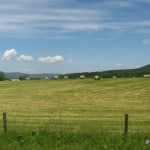
Last weekend, we headed to our mountain property as planned. Saturday arrived bright and beautiful. There’s a point along our route, about a third of the way there, where you can see the mountains if it’s a clear day. When we reached that spot, you could see them in the distance. We exclaimed in unison, “Look!” The views along the way were absolutely fabulous that day and I’m sharing a few here. These are some of the scenes we see repeatedly whenever we head to our property—always comfortingly familiar, yet ever changing.

memorial-day-2009-007

memorial-day-2009-019

memorial-day-2009-029

memorial-day-2009-033

We weren’t quite sure what to expect when we actually got to our place. How tall would the grass be? Would our dock still be there? Would there be any other surprises? (With property 2 hours away, there are often surprises.) We had been up for the day about a month earlier (as I shared before). On that visit, we’d discovered our small dock had broken free of its “secure” line. High waters had floated it upstream before it settled slightly askew near the neighbor’s shore. We weren’t prepared to retrieve it that day, so we’d left it as it was and kept our fingers crossed that despite more spring rain it would still be there when we returned. My weekly checks of the website showing daily river levels indicated that the water level had risen to 8-foot levels the week before Memorial Day. (Normal summer levels are only about 2 feet.) So, we wondered about our dock. I didn’t see it immediately upon our arrival, but my husband spotted it several lots down (or more correctly up, as the Shenandoah flows north). It was lodged against some trees and debris. While I was thrilled to see it, trapped and waiting for us, inwardly, I groaned because I couldn’t see us tackling its rescue very easily. I had already run through the possible scenario in my head on the way there … pulling the dock to shore and laboriously carrying it back through brush over uneven ground for several lots before we could return it to its proper place. But, hubby had another plan. About halfway through mowing the grass (which wasn’t too high, thankfully), he donned his swimming trunks and waded into the cold water. When he reached the dock, he “manhandled” it enough to flip it over to allow it to float like a raft. Then he walked back, steering it, until he was able to flip it again and return it to its proper spot. His was a simple plan really and it worked beautifully. I was proud of his ingenuity, which is really to say I was proud of his common sense skills. He really just used what the “tools” at hand—the water, the flat surface of the dock, and his muscles. He worked with what he had. He didn’t need another person (or a crew), he didn’t need some special tool, like a “come along” winch system to haul it to shore … he just needed to consider what was already available to see if he could achieve the result he wanted and needed, and then go from there.

gfe-memorial-day-2009-043

gfe-memorial-day-2009-057

gfe-memorial-day-2009-108

memorial-day-2009-046

Incidentally, we did get another great surprise! Right above our clothesline, downy woodpeckers had drilled a nice-sized hole in a fragile tree to raise a new family. Mama and Daddy worked non-stop during the day to keep them fed. The only time the babies stopped their squeaky chorus was when they were being fed or sleeping. It was quite entertaining. When I had free time, I positioned myself in my chair with my camera. I got a few good shots, and while this is not the best one, it’s the only one that shows the mama and the babies.

memorial-day-woodpeckers-2009-131

We’d actually hit another bit of a snag right before leaving the house … my all-important camping list was nowhere to be found. So, we both worked from memory quietly packing up the items that we’ve come to learn we should have on hand. My main focus is the cooler and the food box. Other than a stop for ice, I didn’t want to have to pick up any groceries along the way. I threw some russet potatoes for baking, several apples, a few pears, two different kinds of almonds, and some cashews in the food box. Then I turned my attention to the cooler. I’d gotten two artichokes the week before—a requirement for our camping trips—so in they went. A frequent lunch while camping is all-beef hot dogs, so I added a half package of those (more than what we needed, but I’d save the “leftovers”). I had some boneless chicken breasts (a package of 3) in the freezer, so I pulled those out for our dinner.

An old favorite of mine is called marinated chicken breasts. It came from a magazine like Family Circle or Woman’s Day many years ago—not sure which, because I wrote it on a recipe card at some point and tossed the clipping. The recipe is so simple. It calls for one cup of barbecue sauce and ½ cup of Italian dressing. You just combine the two into a marinade and pour over chicken breasts, marinating for an hour or more. (Of course, ensure any pre-made products are gluten free.) Then broil or grill. I don’t buy Italian dressing any more because it’s just as easy, less expensive, and healthier to come up with one’s own concoction. This time I had leftover “dipping oil” from our support group meeting last week. One of our younger members, Tara, had shown up beaming with some terrific gluten-free breadsticks she’d made. Her mom suggested we make a dipping oil when they arrived. Mild olive oil mixed with pizza seasoning (oregano, basil, garlic, marjoram, red pepper, thyme, and savory) had worked just fine. There was just enough of the oil leftover to substitute for the Italian dressing in the marinade, so I added it to a glass jar with Kraft’s original barbecue sauce. (While Kraft is not terribly impressive for a sauce by itself, it can be a good sauce to keep on hand and enhance via a recipe like this one. However, I did just realize it contains high fructose corn syrup—ugh. Still gluten free, but next time, I’ll probably just make my own barbecue sauce.) Once we got to our property, I cut the chicken breasts in half with my kitchen shears, placed them in a Ziploc bag, and poured most of the marinade over them (reserving some in the jar for later in the barbecuing process). By the time we were ready to cook dinner, the breasts had marinated (and thawed at the same time) for several hours. Then I just grilled them, adding a small amount more of the sauce about the last 10 minutes of cooking. These are really some very moist and flavorful chicken breasts. In general, boneless chicken breasts can be much drier than bone-in breasts, but not when marinated this way.

memorial-day-2009-087

As for my baked potatoes, apparently I didn’t stab the potatoes enough prior to wrapping them in foil and/or we didn’t have sufficiently hot coals in our fire pit. When the chicken and artichokes were ready, they were not. However, this was no biggie to me as I had other plans for them. We left them in the fire while we enjoyed our chicken and artichokes. That meal was plenty, really. After eating, we pulled the potatoes out of the fire, let them cool, and then placed them in a container in the cooler. I had already decided they’d be part of our breakfast the next morning. I’d actually cooked three potatoes. If we’d eaten two of them for dinner, I would have still had one for breakfast. My original plan was to use them to make either hash browns or chicken hash. I was playing it by ear, depending on how much we had leftover of each. We ended up with one and a half chicken breasts left and the three potatoes. There was also some butter I’d reserved from the mini-sauce pan that we’d used for dipping the artichoke leaves and the hearts. So the next morning, I chopped the potatoes into reasonable-sized chunks, added the “recycled” butter, a little olive oil, sea salt, and some cayenne pepper and grilled until the potatoes were getting a crispy golden brown. Then I added the leftover chicken, which I’d coarsely chopped. This chicken hash made a wonderful, hearty breakfast. It would have been even better if I’d remembered to bring an onion! (Onions were on the missing list!) The leftover chicken hash even became dinner once we returned home. Hash is a very easy, versatile dish. It can also be made with leftover bits of hamburger, steak, roast, or ham. You can add in green onions, peppers, or whatever appeals to you.

Both the grilled chicken dish and the hash are examples of meals that are naturally gluten free or can be made gluten free easily—gfe! They are the food equivalent to “some assembly, but no special tools required.” Looking for similar ideas? Click here for a PDF file of 50+ meals that are gfe. (This listing will also always be located under gfe’s tip sheets on the sidebar.) The grilled chicken dish would come under item #21 (or #2, for just barbecued chicken). That’s one of the areas highlighted to indicate there are just so many possibilities in that category. Hash is item #23. As shown, you don’t even have to necessarily use your own potatoes (Ore-Ida has many gluten-free options), but I promise you making hash browns or hash is very easy and economical. Anyway, I bet you’ll find some favorites on this listing. As you’ll see noted, some of these meals will require slight adaptations to be gluten free. For example, if frying something like chicken or liver, you’ll obviously need a gluten-free breading. If making meat loaf, your ingredient that provides the filling or binding will have to be gluten-free. If you like using bread to make your meat loaf, use gluten-free bread, or try an alternative (e.g., Parmesan cheese, gf oats). Or, skip the filler. I’ve made my meat loaf with no “filler” many times and it’s been just fine. (I do like to make a pretty tasty topping for it though.) Some of the meal ideas on this listing have been featured here on gfe already (e.g., crustless quiche, oven-steamed shrimp, jambalaya, soups—everything soup, baked potato soup, vegetarian chili). Do a search or look by category here at gfe, and, of course, you can anticipate many more of these recipes in the future. :-)

This tip sheet, 50+ meals that are gfe, and most of the other tip sheets come back to the basic premise of using what’s available to you for food to make simple gluten-free meals and live gfe. Just as my husband demonstrated with his dock rescue effort, no special tools are really required. Just use common sense and don’t make it harder than it is. I ramble on a bit in my posts to show some of you folks who are new to eating gluten free (and some of you new to cooking as well) the thought process I go through. I want to show you that you can make a great meal with few ingredients at any time. You won’t see extensive planning, lists of exotic and/or expensive ingredients, and recipes that merit the label “difficult,” here at gfe. It’s just not necessary.

Last, remember my apple pie for mom on Mother’s Day? Well, you can find the whole Go Ahead Honey It’s Gluten Free roundup of fruit recipes for this month over at Emilia’s Gluten Free Day blog. You will not believe the photos–stunning. So, you know the recipes must be out of this world! You must go check them out. Carol of Simply … Gluten Free is hosting for June and her theme is manly recipes–what fun, huh? I’m actually hosting for July … something to look forward to, but I’ll wait until the appointed time to announce my theme. Thanks to the clever and generous Naomi of Straight Into Bed Cakefree and Dried for this wonderful blog carnival that she’s had going for quite some time now!

Shirley
Not just gf, but gfe!

Non-taboo “Tabouli” for Friday Foodie Fix

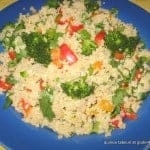
Diane’s Friday Foodie Fix for this week inspired me to make a dish I’ve always thought about making—a tabouli made using quinoa instead of bulgur wheat. Yikes, bulgur wheat … not something those of us who are gluten free want to eat. But, quinoa, on the other hand is gluten free, and it’s a nutritional powerhouse. The packaging of the Ancient Harvest Quinoa that I use states that it’s “one of the best sources of protein in the vegetable kingdom” according to the National Academy of Sciences. It provides all the essential amino acids. You can read more about quinoa’s wonderful benefits here. Diane also talks about quinoa’s redeeming qualities and shares not one, but five, of her recipes using quinoa (from salads to desserts). Based on past Friday Foodie Fix events, at least a dozen more great quinoa recipes will be added by other talented bloggers and readers before this weekend is over. So keep checking back at her W.H.O.L.E. Gang site.

Tabouli (also spelled tabbouleh or tabouleh) is a Middle Eastern dish. Wikipedia says it’s a Levantine Arab dish and cites the typical ingredients as bulgur wheat, mint, parsley, tomato, scallion, herbs, lemon juice, olive oil, and seasonings. Sometimes, so much parsley and mint is used in tabouli that the dish looks very green, but most tabouli I’ve seen looks more like a rice pilaf dish. That’s the look I decided to go for with my version of tabouli.

I was first introduced to tabouli back in college. One of my friends had lived in the Middle East with her family as a teenager. She introduced me to both tabouli and hummus. I love good hummus. (It’s a great staple for those of us who are gluten free, and is widely available now.) But, tabouli was, uh, interesting, to me. I decided it was okay, but it was not something I wanted to eat often or in large amounts. Maybe my body was speaking to me (“no bulgur wheat—bad!”) or maybe it was just the mint factor. Actually, I prefer my mint in ice cream …you know, that kind with the chocolate chips. I’ve tried mint in tea (hot and cold) and dishes, but it’s just not my thing, and, honestly, it’s not something I’m going to work on changing. (But, there are other items on my “learn to eat” list as you all know.)

What could I substitute for the mint to get a similar effect with my tabouli? Well, in last week’s shopping trip, I picked up some cilantro to make Melissa’s Spicy Squash Salad. (I had planned to make Melissa’s wonderful salad for our support group meeting, but, alas, I ran out of time before the meeting. So, the butternut squash remains on the counter, as well as the Fuji apples … hopefully, I’ll make the salad this weekend—once I’m done helping my son with his apartment move.) So, I decided to use cilantro in place of the mint. I enjoy dishes with cilantro—when just the right amount is used; otherwise, I find it overpowering. But, used properly, cilantro adds a very nice freshness with its citrus-like taste.

We were having tacos last night, so after I cooked the quinoa I added most of the ingredients I had prepared for the tacos: red pepper, yellow pepper, green pepper, and sweet onion. I skipped the lettuce (Iceberg … hubby’s thing), mushrooms, and cheddar cheese, but I had some broccoli I’d lightly steamed, so I added some of that as well. Of course, garlic was a requirement; I added a clove of garlic (maybe more), minced. I wanted to add some chopped cucumber, but my cucumber was well past its prime … next time on the cucumber.

gfe quinoa tabouli

Quinoa Tabouli
(Click here for a print version of this recipe.)

2 – 3 cups cooked quinoa (I used one cup of the uncooked Ancient Harvest quinoa and prepared it per package instructions; I’m not sure how much it made exactly)
¼ cup cilantro, chopped
¼ cup yellow pepper, chopped
¼ cup red pepper, chopped
¼ cup green pepper, chopped
1 medium-sized sweet onion, diced
1 cucumber, chopped
some broccoli (either raw or steamed will work)
1 – 2 cloves garlic, minced
seasonings (optional, and of your choice—I didn’t add any) Update: I did add some balsamic vinegar, olive oil, and sea salt the next day when serving this tabouli cold.
dressing (optional, and of our choice)

These amounts are approximates. Often I add enough of an ingredient until the dish looks “right.” I like colorful and I wanted a taste of all of these ingredients in every bite. “Chopped” means coarsely chopped to me, whereas, “diced” means I went for a finer chopping. When making your own tabouli you can follow these guidelines, but really just add whatever you like and cut your ingredients as fine as you like them. There is no right or wrong way.

You can eat the tabouli while your quinoa is still hot, right after you’ve added the other ingredients, or you can eat it cold. (Some say that quinoa tastes better after you let it “rest.”) Because we were having tacos, I placed a little taco meat* in the taco shell and then filled it with the tabouli. This tabouli taco was unbelievably good. My usual tacos include cheddar cheese, but I didn’t miss that at all. I ate two tacos! But, they were probably the best and healthiest tacos I’ve ever eaten!

If you are using your quinoa tabouli as more of a cold salad, you can opt for a dressing of some type. It doesn’t have to be anything hard to make—perhaps a mixture of lemon juice, olive oil, and seasonings; or just squeeze some fresh lemon juice or drizzle a little olive oil over your tabouli. My friends, Pete and Kelli, of No Gluten, No Problem shared the basics on a quinoa salad they first enjoyed in Bolivia with another classic, easy dressing. Again, very simple, but delicious—and, naturally gluten free. If you’ve never had quinoa before, give it a try in this tabouli dish. I think you’ll love it! If you’re already a big quinoa and tabouli fan, please share your favorite way to prepare it.

Shirley
Not just gf, but gfe!

*We use ground venison and the recipe from the Betty Crocker cookbook for seasoning … no packaged mixes required with their additives and preservatives.

Celiac Guest Post and Crockpot Jambalaya

Update: This post is linked to What can I eat that’s gluten free? over at The Gluten-Free Homemaker.

A few weeks ago, I shared my delight with you all at receiving my first two blog awards. Today, I am tickled to share that the lovely Anali invited me to write a guest post on celiac for her terrific blog, Anali’s First Amendment. It’s up now—you can check it out here. It was a challenging assignment and I could have written a lot more, but you all know me, isn’t that always the case? LOL As those of us in the gluten-free community know though, celiac is a serious subject. It doesn’t quite fit into “the box” as neatly as we’d all like, and it’s a topic that merits thorough discussions. At least 3 million people have celiac disease and about 97% of them remain undiagnosed. Please read the post and share it with anyone who may find it helpful. Thanks so much, and my sincere thanks to Anali for giving me the opportunity to reach more readers who may be impacted by celiac disease in some way.

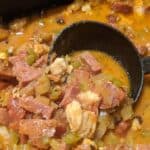
Now … jambalaya. Jambalaya, jambalaya. Don’t you just love saying that word? I know I do. That particular combination of consonants and vowels with the emphasis on the third syllable is just right. Say the word and immediately, you’re not only thinking of the fabulous dish with all its flavors, but also the heat and smells of bayou country and hearing the sweet sounds of Zydeco music. If you’re lucky, you’ve actually listened to some great Zydeco music. My absolute favorite Zydeco musician is Terrance Simien. Terrance hails from Mallet, LA and was featured with the Mallet Playboys (his band at the time) in the movie, The Big Easy. For years, he used to play in our area every few months. We, and many of our friends, packed into a local nightclub—standing room only and a hot and sweaty experience, but it was entirely worth it. Zydeco music has an energy and sound all its own and Terrance is a sweetheart of a guy and an incredibly talented musician. Now, Terrance’s group is more aptly named The Zydeco Experience. If you haven’t already, you absolutely must hear him live one day. An intimate venue would be ideal because not only does their sound and passion come through better, but you might just luck out and get called up on stage to play the frottoir (think washboard-type instrument worn like body armor—don’t worry … no domestic duties required). By the way, Terrance and his band won a Grammy for best Zydeco or Cajun music album last year–very well deserved. Jambalaya. Both the word and the dish are just fun and, sometimes, even sexy—thinking of Terrance or perhaps Ellen Barkin (and The Big Easy, back in the day). But, I digress a bit.

Jambalaya … the dish itself is as great to eat as the word is fun to say. Wikipedia says that jambalaya is a Louisiana Creole dish—“the New World Version of the Old World dish, paella.” Creole cooking is known to blend various influences, such as French, Mediterranean, Spanish, African, and American. Sometimes jambalaya is called Cajun, and while it seems there were once major differences between Creole and Cajun cooking, now the labels are used fairly synonymously for dishes. I was surprised to learn there are three versions of jambalaya—red, brown, and white.

I visited my wonderful and beautiful friend, Linda, last spring. She doesn’t live in Louisiana, but close enough. She lives in Fairhope, Alabama, on Mobile Bay. She relocated there from my neighborhood and has absolutely loved the vitality and beauty of Fairhope. It has a thriving arts community with warm, friendly people. In addition, it’s incredibly charming and picturesque, often being featured in Southern Living magazine. Linda picked me up at the airport and then drove us around the area briefly showing me some of the highlights of her every day life. When we finally opened the door to her new home, a fabulous aroma greeted us. She looked at me, smiled, and said, “jambalaya, crockpot.” I do love that word … and the dish.

Linda, who is also gluten free, modified a recipe she’d found in Better Homes and Gardens. When I made it on my own once back at home, I adjusted it a bit more. The original recipe was naturally gluten free, so no modifications needed to be made in that regard. But, I often modify this dish to whatever I have on hand. The beauty of jambalaya is that it’s such a versatile dish. It readily adapts to different meats, seafood, and vegetables. You can even make a vegetarian version, if you like. This recipe calls for smoked sausage and shrimp, so I am submitting it for the Friday Foodie Fix to Diane of The W.H.O.L.E. Gang blog. As Diane mentioned in her post, she and I are both huge shrimp fans. I love how Diane writes up the nutritional merits of the special ingredient each week. I love my shrimp for the fabulous flavor, but thanks to Diane, now I feel more virtuous eating it! :-)

Incidentally, another great point about shrimp is that shrimp dishes are often served gluten free easily (gfe!). Steamed shrimp (just be sure they are not steamed in beer—yes, it does happen) and shrimp Norfolk are two of favorite options for dining out. (Usually any Norfolk dish is just seafood that has been broiled in butter with safe seasonings, but always check on seasonings, and sometimes (but, rarely), bread crumbs are added.) Shrimp and Crab Norfolk was my meal when we dined at our favorite local waterfront restaurant on Mother’s Day. (By the way, my dessert was crème brulee— another gfe option when prepared safely … yum.)

monroe-bay

My entire visit with Linda was a treat last year, but walking into the smell of jambalaya was the best possible welcome. I’ve made my version many times since. It’s now a favorite of my support group, too. And, because it’s another crockpot dish, it makes life just a bit simpler, and more economical. I heard today in a cost-saving segment on TV that you can operate your crockpot for 8 hours for 10 cents! Impressive savings, huh? The part I like just as much though is the negligible heat in the kitchen. That pesky air conditioner had to be run for a while today, and I just don’t like it. Crockpot meals (and grilling, of course) can help tremendously by not adding to the heat this time of year.

We are headed to our mountain property in the morning–our favorite retreat, with less heat and humidity. Hope everyone has a wonderful Memorial Day weekend! Let’s remember those we’ve lost in service to our country and spend special time with our family and friends—always the best way to spend any holiday, I think.

Jambalaya … what do you like to add in your version?

Shirley
Not just gf, but gfe!

gfe-jambalaya-rev1

Crockpot Jambalaya

Part 1

1 large onion, chopped
1 medium green bell pepper, chopped
2 ribs celery, chopped (1 cup)
8 oz smoked sausage, sliced (I used Hillshire Farms)
1 can (28 oz) diced tomatoes in juice, not drained (or one 14-oz can diced tomatoes and one 14-oz can of V-8—for extra zestiness)
2/3 cup wine (any kind) or chicken broth
6 cloves garlic, chopped (or equivalent minced)
1 tsp dried thyme leaves
1/2 tsp sea salt
1/2 tsp pepper
1/2 tsp hot pepper sauce
2 tbsp chopped fresh parsley (optional, or dried, 2 tsp)

Part 2

1 cup uncooked Minute brown rice (or 1 ½ cups cooked full-grain brown rice) (Note: Quinoa should work as a substitution. I”ll report back when I, or one of my readers, have tried it.)
1 lb peeled, deveined raw or cooked medium-sized or larger shrimp

Directions

1. Mix all ingredients EXCEPT shrimp, parsley, and rice in a 3 1/2-qt or larger crockpot. Cover and cook on low 6 to 8 hours until vegetables are tender. The mixture will still look a bit soupy, but will thicken once you complete the next step.

2. Stir in rice; cover and cook 15 minutes or until done.  Then stir in parsley and shrimp (uncooked shrimp will cook in about 5 minutes).

Adapted from a Better Homes and Gardens recipe.

Shirley’s Additional Notes: While Minute rice clearly doesn’t have the nutritional value of cooked full-grain brown rice, I still have issues with some whole grain products, so it works better for me. If I will be cooking the jambalaya while I am at work and will be gone longer than 8 hours, I prepare everything in the crock pot the night before, so I don’t have to rush in the morning (and so it is not overcooked by the time I get home from work). The cold ingredients guarantee a slower start. I follow this approach even with my crockpot that switches from cooking to warming to avoid overcooking. When I am making this dish for a crowd, I cut the sausage slices in half and cut the shrmp into smaller pieces to ensure that they get distributed properly in all servings. If you’d like a bread to accompany your jambalaya, either gfe cornbread or popovers work well.

Related Posts with Thumbnails

Next Page »