Archives for “chicken”

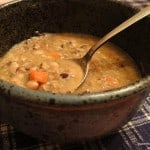
Black-Eyed Pea Soup (with Ham and Chicken)

This post is linked to Slightly Indulgent Tuesdays, What can I eat that’s gluten free?, Crockpot Wednesdays, and Pennywise Platter.

One of my favorite people and, also, one of my favorite gluten-free bloggers is Stephanie of A Year of Slow Cooking. For a year, she literally cranked out crockpot recipes day after day—without fail. Now she stays busy with so many other things including two other blogs (that makes three in total), a new baby (that makes three children), a hubby, and so much more. However, she still gives us, her loyal readers, enough recipes on her slow cooking blog to keep us happy. All of her recipes are gluten free, but I love that so many of them are naturally gluten free. That’s a large part of the gfe approach. For one thing, it just makes life easier not to have to remember to order a case of gluten-free X or to have to run out to get gluten-free Y, particularly since there are no gluten-free specialty items in my grocery store. So, in my opinion, cooking with real food just makes sense for convenience. That may seem contradictory to many, but it’s true. But let’s get to my latest favorite recipe of Stephanie’s.

Stephanie posted a Black-Eyed Pea Soup recipe  for New Year’s Day. I have loved black-eyed peas long before they were the name of a hip musical group. Give me some black-eyed peas and I’ve got a wonderful meal. So, this recipe has been in the back of my mind. With a support group meeting coming up, I wanted a dish that would serve many, but I wanted to use mostly what I had on hand. Stephanie’s recipe calls for spiced sausage, but I didn’t have any. My mom and my sister always save the ham bones from holiday meals for me so I can use them to make soup from scratch. Sometime that’s potato soup, but more often than not, it’s a soup that combines veggies and other meat, like chicken or turkey (or sometimes small amounts of several meats, like in my Everything Soup). My sister had given me a nice big ham bone, with a decent amount of meat left on it. The freezer yield two chicken carcasses. I also had a big bag of carrots and package of celery in the refrigerator just waiting for some action.

I added a few inches of water to my big stockpot and brought it to a boil and then added my frozen chicken carcasses. I let them simmer for a while as I did other things in the kitchen. Occasionally, I’d stir them, and finally I turned the burner off and left the lid on a while. Once I was sure the meat was ready to be picked off the bone, I put a colander inside another stockpot and poured the whole pot through the colander. My lovely broth was in the pot and the chicken—bones and all—remained in the colander. Once that cooled a few minutes, I picked the chicken off the bone and set it aside. This is really a great way to get the most from a chicken and not have waste. Even if I buy a rotisserie chicken at the store, I know we will eat a few meals from the chicken before I freeze it and it eventually gets turned into great broth and other meals. So even at a price of $6.99 for a rotisserie chicken, I can end up with several meals and at least a quart of chicken broth. That sounds like a bargain when you look at it that way. So imagine what a savings, roasting your own chicken could be. I often make broth from my chicken carcasses; then I use the “found” chicken for soup or other favorites like chicken pot pie and chicken and rice casserole. However, feel free to use safe packaged chicken broth and chicken from cooked chicken breasts, etc. for this recipe.

Black-Eyed Pea, Ham, and Chicken Soup
(Click here for a printable version of this recipe.)

1 pound dried black-eyed peas (I don’t recommend using canned as a substitution, but fresh or frozen would work well)

1 ham bone (ideally, with some meat remaining on it)

2 cups, cut-up chicken

2 diced onions

2 cups diced or sliced carrots (I prefer slices, but I halve the larger slices)

1 cup diced celery

6 cloves garlic (I used 3 tbsp minced garlic)

6 – 8 cups of chicken broth (I used my homemade broth and just kept adding until my crockpot was almost full)

1/2 tsp Italian seasoning

1 tsp coarse sea salt (any salt will work though)

Soak your beans overnight. Drain and pick out the undesirables (e.g., discolored beans) in the morning.

Use a 5- to 6- quart crockpot. (I used my 6-quart oval programmable crockpot.) This recipe will serve a lot. It served at least a dozen folks at my support group meeting. (We had about 25 folks, but not all ate soup. Those who did enjoyed at least one full mug.)

Dice the veggies, and add them to the crockpot with the black-eyed peas that have been soaked and drained.

Pour in broth, and stir in Italian seasoning and salt.

Add ham bone. You can also add the chicken at this point, or save it until closer to the end of cooking time. As your chicken is already cooked, it’s your preference on when you want to add it. I did add mine at the beginning and the soup was great, but adding it at the end would have also worked and kept the chicken in nice little chunks.

Cover and cook on low for 8 hours, or on high for about 6. About a half hour to an hour before serving, use an immersible blender to smash up about 1 cup of beans. If you don’t have an immersible blender, scoop out 1 cup of beans, blend them in a traditional blender, and add back to the soup. You will really only need to blend for a few seconds. Stir after blending. The soup will thicken and have the most wonderful color.

Adapted from Stephanie O’Dea at A Year of Slow Cooking

Shirley’s Notes: If you don’t want to use ham, but would like the flavor, Better than Bouillon makes a ham base that could be used. Probably a teaspoon or two would add some nice flavor. If you’d like fewer servings or would like to use a smaller crockpot, don’t just halve this recipe. You’ll want the same amount of black-eyed peas, 2 cups of meat, 4 cups of broth, and about the same amount of seasonings. Be sure to take a look at Stephanie’s recipe, too, which serves 8. Stephanie suggests adding Tabasco sauce to taste after you’ve ladled your soup into your bowl. We enjoyed it without, but if you like to add a little zip to your soup, that might be an option for you. Any time, we want a little taste of hot at our house, we tend to add some Texas Pete hot sauce. Many of the peppers used in Texas Pete are grown locally.

I have two cooking confessions. Confession #1—This is the very first time I’ve ever soaked black-eyed peas. I’ve always used canned black-eyed peas before, although one has to be careful to find good ones. (Some canned black-eyed peas are very mushy and come in a thick unappetizing broth. Other brands contain just black-eyed peas in salted water and taste pretty good.) These dried black-eyed peas are far better than any of the canned varieties and almost seem dainty in comparison, even after soaking. As Alta added in comments, fresh black-eyed peas are the very best when you can get those. She said that frozen black-eyed peas come in a close second. As both Alta and Stephanie said, black-eyed peas offer a wonderful, earthy flavor. I’ll definitely be using more dried black-eyed peas. I’ve never even seen frozen black-eyed peas before, but I’ll look for those, too. One benefit of using dried black-eyed peas is that like other dried beans, they are very inexpensive.

Confession #2—I’ve never used an immersion or “stick” blender before. I’ve had one stashed in a cabinet for years. Son had received one as a gift for dorm life for making milkshakes and such. That involved what he considered to be work, so he left it behind for me to use instead. When Steph’s recipe called for this type of blender, I pulled it out and was delighted at how well it worked. I’ll be using that blender a lot more for soups, sauces, etc.

Several readers commented on Stephanie’s post that they didn’t even like black-eyed peas, but loved this soup. So, if you’re not a black-eyed pea lover, you still might want to give this soup a try. Several of my members commented on how much they enjoyed this soup the other night. I heard the words “comforting” and “homey.” On a cold evening with alternating rain drops and snow flakes, this soup was indeed very welcome. Even those who didn’t comment must have enjoyed it, because there was little left from the full slow cooker. I served this soup with mini-corn muffins and that made for a great combination.

Because soup always thickens in the refrigerator overnight, I added some leftover chicken broth to make my mug of soup for lunch yesterday. For dinner with these leftovers though, I’ll just reheat the thickened soup and serve it over some mashed potatoes. The thickened soup would also be great over rice over or noodles. If you’re looking for some other great soup recipes, be sure to head over to Linda’s What can I eat that’s gluten free? roundup where soup is the theme this week. I already took a peek and there are some terrific, new recipes … like Diane’s West African Chicken and Peanut Stew  and Jenn’s Osso Buco Stew. I love it when there are so many recipes that make your mouth water, that you’re not sure which one to try next. Linda had a great idea with her soup challenge!

What else is happening?

Chaya is hosting her first giveaway over at her Sweet and Savory blog … a Paula Deen cooking ensemble. Check it out here.

Diane’s Friday Foodie Fix tomorrow features rice recipes. If there’s something most of us who are gluten free know about, it’s rice! Be sure to link up your favorite rice recipe and check out others here. Diane is also doing a survey and soliciting input right now on eating out gluten free.

This Sunday is the Academy Awards show where those golden Oscars get presented. If you hadn’t had time before, take a few minutes to check out our Gluten-Free Progressive Oscar Dinner Party. You can see all the links at my two posts for this event: Veronica’s Pumpkin Soup or Southern Fried Oysters.

Ginger hosted The Gluten-Free Lifestyle Blog Carnival this month. See all the entries at her site, Ging Recommends. Created by Kim, The Food Allergy Coach, this carnival features recipes, tips, reviews, and so much more. Take the time to read what’s been submitted here and consider adding your own links next month.

I enjoyed seeing the tropical vacation meals in this month’s Go Ahead Honey, It’s Gluten Free! carnival over at Bean’s Without Adornment. Anything associated with the tropics is very appealing to me right now. There are some fabulous meals and even a few drinks that are so worthy of those cute, colorful little umbrellas. Get tropical here.

Next month’s Go Ahead Honey is being hosted by Amy over at Simply Sugar & Gluten-Free. Her theme is Guiltless Pleasures. Being the Slightly Indulgent queen on Tuesdays, she’s now going to take us to the next level! (Check out this week’s Slightly Indulgent entries here.) Fellow bloggers, start planning your post now. (You can read the rules here.) Readers look for Amy’s roundup at the end of the month. I have enough guilty pleasures already, so some guiltless ones will be very nice!

Shirley
Not just gf, but gfe!

Chicken Tenders—Cornmeal or Coconut

This post is linked to the Slightly Indulgent Tuesdays, Tempt My Tummy Tuesdays, and What can I eat that’s gluten free? weekly carnivals.

Mr. GFE and I had a nice, quiet day at home today. It was a scheduled holiday for him. Not so for me, but I made it one … and that was a great idea! We ate our respective breakfasts … cereal for him and a one egg “omelet” with spinach for me.  Then for a mid-morning snack, we ate the last of a weekend batch of the Cinnamon-Sugar-Crusted Popovers. That indulgence, of course, made us not want anything for several hours. When we finally did eat again, instead of a quick, light lunch, I decided to go for something more substantial, but still healthy enough. The refrigerator yielded about a pound of chicken tenderloins (i.e., boneless, unprepared chicken tenders), a small container of coconut, and some cornmeal mix that I’d made for breading chicken earlier. Right then, I decided to make chicken tenders.

As an aside, perhaps the coconut idea appealed to me because I had recently read an article on using Girl Scout cookies as breading. I am not making this up. How does Fried Samoas Shrimp sound?  The recipe included 5 Samoas, 2 cups bread crumbs, 2 cups flour, 1 cup coconut flakes, 4 egg whites, and cayenne pepper … all as breading for 4, yes, 4, extra large shrimp. Wowser. Nutritional information was not provided, but the recipe said it served 5 … so if you stuck to a serving, you didn’t even get to enjoy one full shrimp! And, of course, samoas are not gluten free, unless you make Jenn’s stunning gluten-free version. You can heck our her version over at The Cinnamon Quill.  Her gluten-free Samoas are amazing, but I don’t think I’ll chopping them up and using them to make Samoa-breaded shrimp.

Back to the breading I did use … the cornmeal mix had seemed a little bland the last time I had used it with chicken. And, the coconut I had on hand was actually sweetened coconut, which I thought might be cloyingly sweet. So I added some chili powder to each.

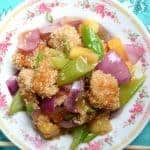
My original idea was to bread the chicken tenders in the cornmeal mix and then dip them in the coconut, but just one attempt showed me that wouldn’t work. The coconut wouldn’t adhere to the chicken tender after it had been coated with the cornmeal mix. So I dipped half of the tenders in the cornmeal mix alone and the other half in the coconut mix alone. I just dipped the washed, and therefore, wet, chicken tenders into the cornmeal mix or shredded coconut. I didn’t need to dip them in eggs or milk beforehand as the original cornmeal mix recipe stated. Just the wetness from the water worked perfectly well (and omitting those ingredients also makes these tenders dairy free and egg free, and obviously lower in calories). Then I fried them all in some grapeseed oil, and drained them before serving. (Note: This was my first time using grapeseed oil and I liked its lightness and neutral taste very much—plus, its added health benefits.) As you can see, because I cooked the two types of tenders together, they all ended up with a little coconut “breading.” We ate them with a little honey barbecue sauce and a few chips and really enjoyed them.

Although I’m providing some ingredients and directions, these are really sort of “improvise-as-you-go” recipes, or as my friend, Erin (Gluten-Free Fitness) likes to say … Not Really A Recipe. When Erin first used that term in reference to her rendition of my Special Turkey Breast, I said something to the effect of “hey, that’s a recipe!” But, then I realized that she used that term as a category on her blog and didn’t mean anything negative at all. Instead, she was demonstrating that so many cooking sessions start out as just a concept or basic method with lots of room for improvisation. She’s totally right. Seize that idea for your cooking and you’ll be a lot happier in the kitchen and end up making some great dishes as well. And, that’s true whether you are gluten free or not.

Cornmeal Mix for Breading
(Click here for a print version of both recipes.)

1 cup cornmeal
1 cup gluten-free flour*
2 tsp baking powder
1 tsp salt
¼ to ½ tsp chili powder, to taste

Mix all together. Pour into shallow bowl for breading. Fry on medium to medium-high about 8 – 10 minutes on each side.

*I can’t tolerate many of the healthier, gluten-free flours; e.g., sorghum, buckwheat. Therefore, my gluten-free flour mix is 3 parts Asian white rice flour and 2 parts cornstarch. I gently mix three one-lb bags of the Asian white rice flour and two one-lb boxes of cornstarch in a very large bowl and then store the mix in several airtight containers (like large glass jars). It’s a very economical mix that works well in most recipes. No refrigeration is needed.

Adapted from Southern Living

Coconut Breading

½ cup coconut flakes (or more if needed)
¼ to ½ tsp chili powder, to taste

Mix. Dredge wet chicken tenders in coconut breading. Fry on medium to medium-high about 8 – 10 minutes on each side.

Shirley’s Notes: The coconut I used was actually sweetened. (It was left over from making Linda’s wonderful Coconut Cashew Clove Cookies.)  So I was worried that these tenders might be too sweet, but the chicken taste itself and the chili powder I added offset the sweetness by just the right amount.

From Shirley Braden

The truth is you really don’t have to buy prepared gluten-free breading mixes to end up with delicious results, and just as importantly, you don’t even need a true recipe. I’ve purchased gluten-free offerings in the past like breadcrumbs at $4.00 for 4 ounces and they’ve ended up going to the birds, literally. There are so many other breading possibilities that work beautifully and don’t break the bank. I’ve shared other options here before at gfe, including two possibilities for a similar recipe for baked chicken nuggets. One used crushed potato chips; the other used crushed cornflakes and lots of seasonings.

Ali (The Whole Life Nutrition Kitchen) did this post a while back with some excellent breading options. I, and several others, contributed additional ideas in comments. Some other easy breading choices that I have used are Parmesan cheese, rice cereal (for babies), toasted and crumbled gluten-free waffles (as shown here), and instant mashed potatoes (my only, occasional use for them).  I’ve heard that tortilla crumbs and corn chips make great breading, too. Along those lines, be sure to check out Diane’s (The W.H.O.L.E. Gang) Frito Fish.

So, the message with these chicken tenders is think outside the box and don’t stress. That’s the gfe way. Now, go ahead, have a gluten-free chicken tender … with cornmeal coating, coconut breading, or perhaps your favorite gfe breading. And, what is your favorite breading? Please share!

Shirley
Not just gf, but gfe!

Chicken Enchilada Casserole & Some Non-Standard Symptoms of Celiac

I’ve been following the celiac listserv since I went gluten free. My doctor directed me to it as a helpful resource. The information shared was a bit overwhelming at the time (what isn’t when you first go gluten free?), but I especially gravitated towards the personal stories. I also found some product recommendations and the recipes (always the gfe ones) helpful. One member of the listserv who was always generous in all of those areas was a lady named Valerie. This Chicken Enchilada Casserole recipe I’m sharing today for Slightly Indulgent Tuesdays, What can I eat that’s gluten free? (Linda’s casserole edition), Tempt My Tummy Tuesdays, and Simply Hot Recipes, was adapted from a recipe that Valerie posted on the listserv. (She had adapted her version from one in Woman’s World magazine.) But, first, let me tell you a little bit more about Valerie and some information that she shared that has stayed with me and is getting more press these days.

I don’t remember if Valerie was diagnosed celiac herself or gluten intolerant/gluten sensitive, but she reacted to even the tiniest amount of gluten (something many of us can relate to). She was a grandmother and she found that after every visit by her toddler grandchildren, she would get ill. Somehow she had been “glutened” just by the shared hugs and kisses with her sweet grandchildren. She came to the conclusion that this occurrence was not surprising really as she would love on her grandchildren practically nonstop—as all good grandmas do. But her grandchildren always had crumbs on their bodies or clothes as all little ones do from eating tiny bits and pieces with their fingers or being messy with utensils. So she started bathing her grandchildren as soon as they arrived at her house, and, of course, immediately dressing them in clean clothes. Her approach worked! She never got glutened again in this manner and she was able to fully enjoy her grandchildren’s visits.

Valerie was also quick to respond when members queried about the psychological effects of gluten. Her son had suffered from a psychiatric disorder for years and she reported that currently he only demonstrated symptoms when he accidentally ingested gluten. Even the tiniest amount would cause him to behave very bizarrely. It got so his family and friends would immediately know if he’d eaten some gluten.

Most of us know that digestive symptoms get the most press by far when it comes to celiac and gluten intolerance. Yet, most of the folks who actually experience digestive issues as a result of a problem with gluten went years before they received a diagnosis and most remain undiagnosed today. Now, consider the folks with non-digestive symptoms, specifically in this case, neurological and psychiatric symptoms. While there are actually many non-digestive symptoms, this post will focus on just some of the ”non-standard” symptoms of celiac—those addressed in a recent Living Without article. (Also, please remember that it’s estimated that about 40% of those with celiac disease experience no recognizable symptoms.) Dr. Stefano Guandalini, the Medical Director of the University of Chicago Celiac Disease Center, responded to questions on the topic of neurological and psychological celiac symptoms in the August/September 2009 issue of Living Without. He shared the story of his 8-year old celiac patient who had been admitted to the hospital with hallucinations and profound depression. Blood testing showed that her gluten anitibodies were extremely elevated. Further investigation showed that because the child had stopped experiencing digestive symptoms, her parents had been giving her cookies on the weekends. Re-education of the parents led to a truly gluten-free diet for the young girl and she returned to normal.

Neurological issues related to gluten remain some of the most difficult cases to diagnose, largely because of lack of knowledge in the medical community. I doubt very seriously if many doctors, maybe that should be any doctors—other than the fictional Dr. Gregory House on the television medical drama, House—would consider celiac as a possible cause for hallucinations and profound depression. I know many patients who have sought help for such conditions and have never been tested for celiac. Celiac disease hasn’t even entered the picture. Dr. Guandalini stated in the Living Without article that patients can have idiopathic epilepsy (meaning no known cause for the epilepsy), ataxia, peripheral neuropathy, recurrent headaches, and autistic-like behavior (e.g., sadness, failure to socialize, excessive irritability, anxiety) with no accompanying gastrointestinal symptoms. In these cases, the gold standard for a celiac diagnosis simply cannot be applied. Dr. Guandalini states that a positive result on the anti-tissue transglutaminase (tTG) screening test alone is a diagnosis of celiac in such cases, because these patients will have few or no digestive symptoms, and they will show no damage to the small intestine. I truly wonder how often a celiac diagnosis actually gets made under such circumstances. I think far, far less than a celiac diagnosis for someone who has digestive symptoms and we know how underdiagnosed those cases are. So, please spread the word on the neurological and psychological ramifications of celiac disease, so that individuals, their family members, and physicians will look at this other facet of celiac disease. (Note that the symptoms shown here are not all-inclusive; these are simply the particular ones cited by Dr. Guandilini in the article.)

In the article in Living Without, Dr. Guandalini was also asked about gluten sensitivity. Dr. Guandalini responded that although he used to be skeptical about gluten sensitivity, today he is “respectful” of those who have tested negative for celiac disease, but report true benefits from a gluten-free diet. He added that in the lab at his own center, early data is showing that changes do occur in the small intestine of gluten-sensitive patients. That is a huge finding in my opinion, and I look forward to additional research results being shared.

Valerie, the celiac listserv member who I mentioned earlier, was always so generous with her time and information. She and I even exchanged emails a few times. Valerie hasn’t posted in a few years now. I find myself wondering what is going on with her and hoping she is well (much like my friend, Nance, wonders about her neighbor, Tish). I miss Valerie and I’m grateful for the recipes she shared, including this casserole dish, which I’ve modified a bit.

Chicken Enchilada Casserole

(Click here for a print version of this recipe.)

1 small onion, chopped
2 cloves garlic, minced
1 Tbs. chili powder (I’ve substituted taco seasoning before when I was out of chili powder)
1 tsp. salt
1/2 tsp. black pepper
1 cup diced tomatoes
1 small can tomato sauce
1 Tbs. cilantro, chopped (optional—I add when I have it on hand)
3 cups chicken cooked, boned, shredded
1 tbsp lime juice
1 jar salsa (16 oz) (whatever hotness you prefer—mild worked well for us)
10 corn tortillas (ensure they are gluten free)
8 oz shredded cheese (Monterey Jack, cheddar, or a Mexican blend—your preference; read labels to ensure gluten-free status)

Preheat oven to 350 degrees F. Coat a large, deep skillet with little bit of oil; heat over medium heat. Add onion, garlic, chili powder, salt and pepper; cook, stirring often, until softened, about 3 minutes. Add one cup of tomatoes, tomato sauce, and cilantro (if used). Cook 5 minutes.

Dump shredded chicken over tomato mixture in skillet. Spoon lime juice over chicken. Stir all together in skillet. Heat a few minutes, if necessary. (If chicken is still warm from its cooking method, you will not need to heat more.)

Spread one half of the jar of salsa in an ungreased 9″ x 13” baking dish; top with 5 tortillas (break into pieces as needed to mostly cover salsa).

Top with chicken mixture; sprinkle with half of the cheese.

Top with remaining tortillas. Spread with remaining salsa; sprinkle with remaining cheese.

Bake until cheese is melted and casserole is hot, about 15 to 20 minutes.

Adapted from Valerie and Woman’s World

Shirley’s Notes: I usually use three boneless chicken breasts that I have cooked in my slow cooker in one cup of chicken broth made from bouillon. Slow-cooked chicken breasts shred easily. Leftover chicken or turkey (great way to use leftovers from the special turkey breast), gluten-free rotisserie chicken, etc., may also be used. Like most casseroles, this dish is one that is flexible. You can skip the tomato sauce and add a whole can of diced tomatoes versus just a cup. (You might have to cook the mixture “down” a bit more in the skillet if you do so.) You can spice it up by using diced tomatoes with green chiles, adding more chili powder, adding chipotle powder, and so forth. Some friends like making this dish using ground beef. Personally, I really prefer this dish with chicken or turkey, but feel free to experiment. Eight ounces is not a huge amount of cheese for a casserole this size, but cheddar cheese appears like more than is actually there because of its rich color. That can be a good thing for the cheese fanatics. I often use more cheese for topping (than I do when sprinkling over the chicken mixture), just so I get that visual appeal.

Shirley
Not just gf, but gfe!

Related Posts with Thumbnails

Next Page »